For most of Western Australia, the best time to get out on trail is April to November, depending on weather conditions. These months generally offer cooler temperatures and safer conditions for hiking and trail running.
Summer (December to March) is usually not recommended for multi-day trips. Extreme heat, limited shade, and remoteness make even short outings risky if you’re inexperienced.
Seasonal Differences Across WA
South West & Mid West: April–November is typically ideal
Northern WA (from Carnarvon north): The safest window is winter (June–August)
Even in winter, temperatures in places like Broome can still reach 30°C during the day, so heat management is always important.
As a general rule, days with a forecast maximum below 30°C offer the most enjoyable and safest experiences, especially for beginners.
Why the Landscape Matters More Than the Forecast.
In WA, the landscape you’re travelling through can dramatically affect how hot or cold it feels—sometimes far more than the forecast suggests.
Even if you plan to finish early, heading out in hot conditions can be risky.
Hot, Exposed Environments
Areas with:
Little or no shade
Large amounts of rock
Dry, reflective surfaces
can be significantly hotter than forecast.
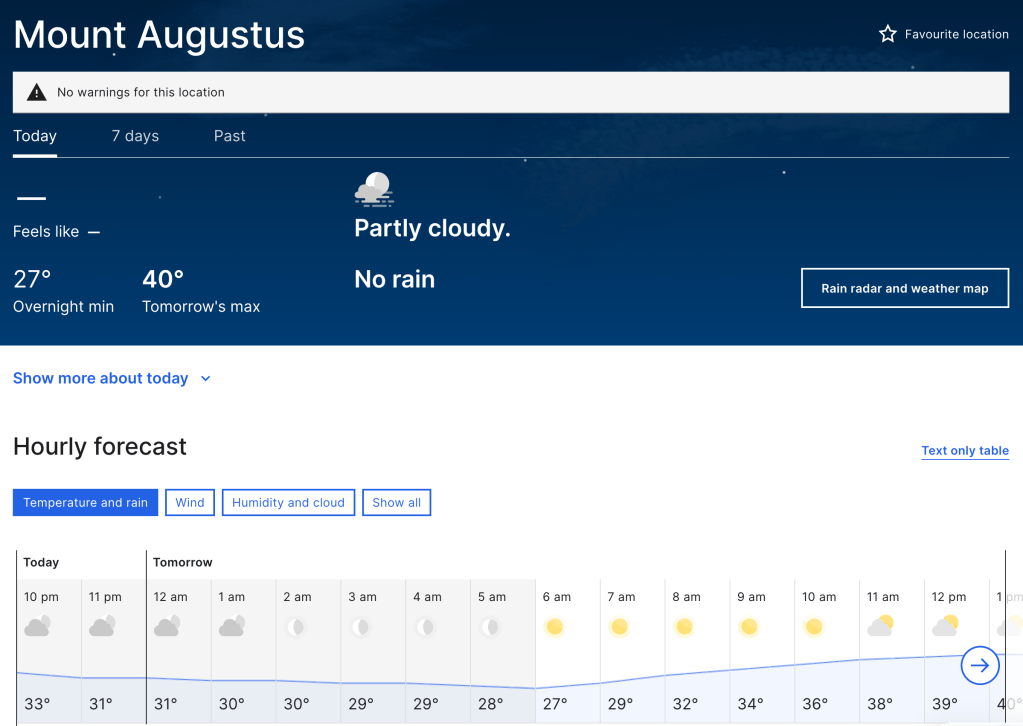
Good examples include Mount Augustus (Burringurrah) and coastal granite areas near Esperance.
When travelling on heat-retaining surfaces like rock:
Ground temperatures can exceed air temperatures by 50% or more
A forecast of 30°C can mean 45°C+ at ground level
Without adequate shade, water, electrolytes, and appropriate clothing, these conditions can quickly become dangerous. Knowing when to turn back is critical.
Sadly, several people in recent years have died from heat-related illness while attempting to summit Burringurrah. This risk is real and often underestimated by those new to hiking.
Cold, Wind, and Rapid Weather Changes
At the other extreme, mountainous and sub-alpine environments can catch people out just as easily.
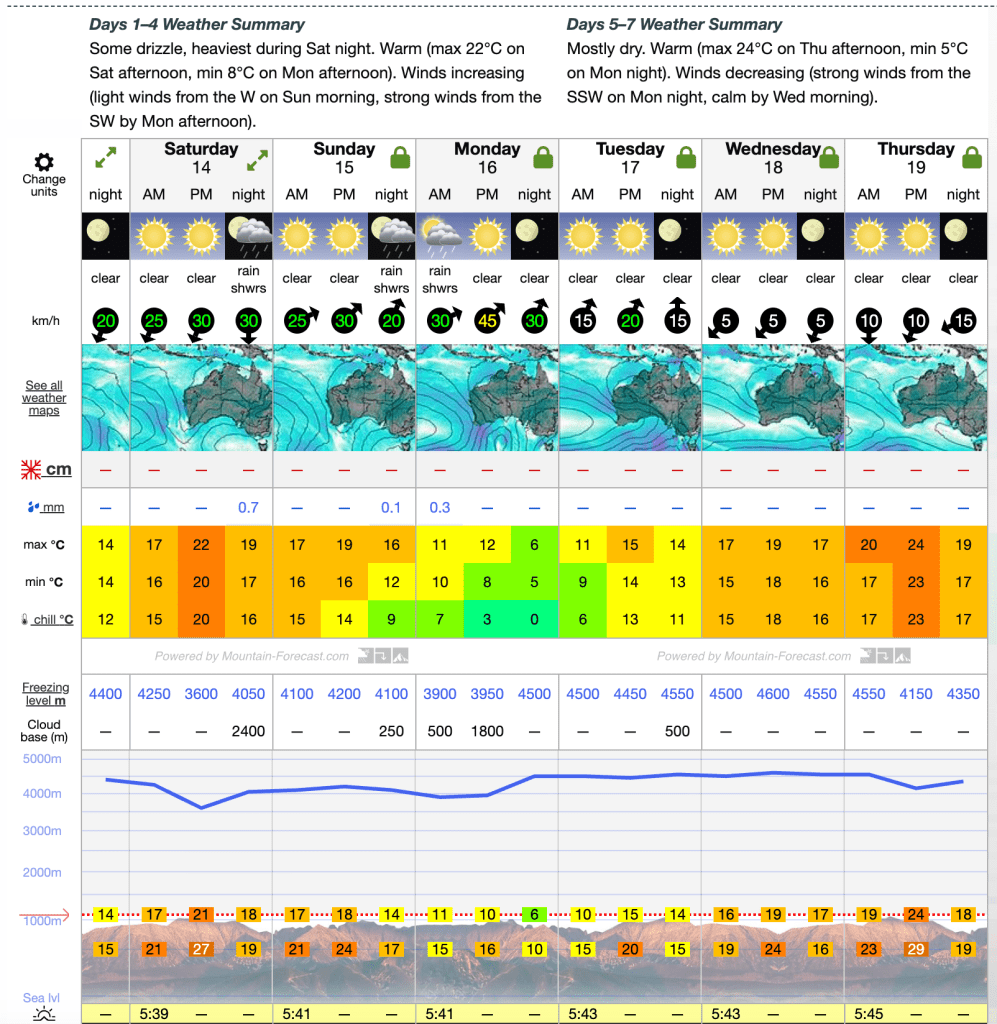
The Stirling Ranges are well known for creating their own weather systems.
A forecast of sunny and 25°C at ground level can quickly turn into:
Heavy rain
Whiteout conditions
Winds exceeding 60 km/h
Many hikers climb Bluff Knoll without wet-weather gear, only to become soaked, cold, and at risk of hypothermia.
The Stirling Ranges are one of the most frequently attended locations for search and rescue call-outs in Western Australia.
Bushfire Risks and Weather Forecasts
Bushfire Risk: Not Just a Hot-Day Problem
Heat isn’t the only summer danger—bushfires are a serious risk, even on mild days.
Dry vegetation combined with strong winds can allow fires to spread rapidly, cutting off access roads and escape routes.
Before every hike or run:
Have a plan to turn back early
Check current conditions
Be aware of total fire bans
What to Check Before You Go
For every trip—short or long—make this part of your routine:
Download and check the Emergency WA app
Review weather warnings from the Bureau of Meteorology
Consider temperature, wind, rain, and fire danger—not just sunshine
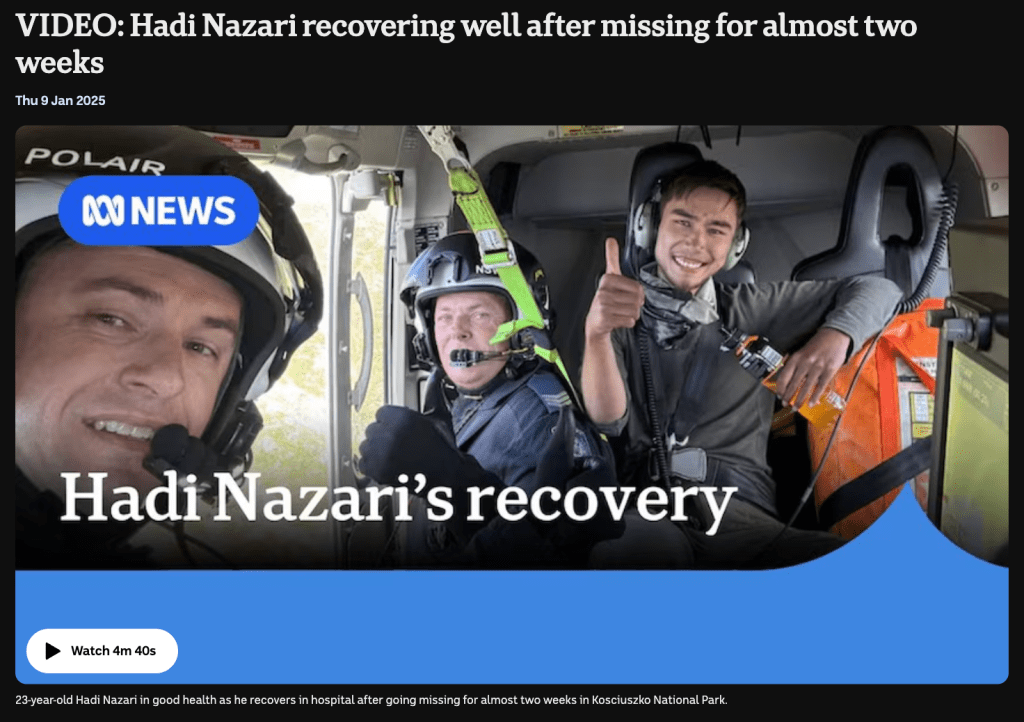
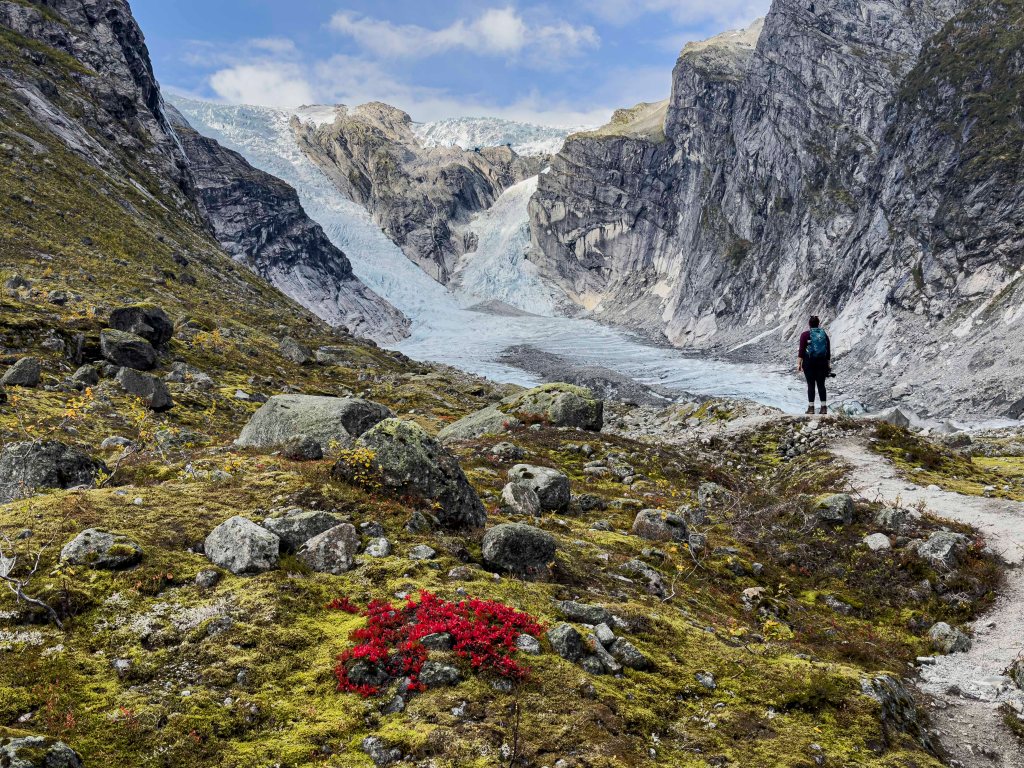
We all start somewhere. If you’re smart, or lucky, hopefully you don’t end up here ꜛ.
For many hikers, trail runners, and other outdoor enthusiasts, we often “try to run, before we can walk” (if you’ll pardon my pun). This post explains why that is, how to avoid it, and a framework you can use to check in with yourself to help avoiding unnecessary risks in the outdoors.
My origin story
My origin story of overnight hiking begins with a 17 year old (me) being given a university assignment: to do something outdoors. This 17 year old had never seen the inside of an “outdoor store”, or even knew that they existed. Growing up in Morley, Western Australia, my great outdoors was either the beach (because my Dad surfed, and would drag me along), or the sports ovals I played on when it was the weekend. Don’t get me wrong, my family would go for day hikes (or several hour hikes) in National Parks on special occasions. But we just weren’t a bushwalking/hiking/climbing outdoorsy family.
So, having read way too many fantasty books where the protaganist was a vagabond who wondered mythical worlds – overcoming immense odds , whilst experiencing events that the poor, misguided, xenophobic, townsfolk from their childhood couldn’t imagine in their wildest dreams… I dedided this was my chance to follow in these protagonists footsteps.
Armed with the misguided belief that I knew everything (as only a teenager can), I purchased a pack, and tent from my local kmart. I filled up some old 2 litre fruit juice containers with cordial. I grabbed a couple of tins of creamed rice and a sandwhich. Found a trail (aka a stretch of beach I could walk up, camp, and walk back down – because I also didn’t know about trails like the Bibbulmun Track either), and organised a lift with my Dad who would drop me off at the start and pick me back up from the same place the next day.
My mistakes
The astute, experienced overnight hikers will hopefully be chuckling right now. Here are some of the issues with what I did: – I didn’t know where to look for hiking related resources. And rather than admit this and seek help, I just made up a route. One that was super simple because I also had no idea how to navigate (this was probably one of the smartest things I did to be fair) – I didn’t check the weather (if memory serves it was early Autumn and the weather was in the high 20’s to low 30’s (celcius)) – My tent wasn’t a hiking tent. It was a 4-6 person tent you could stand up in. So it was heavy. And huge – No sleeping mat to insulate me off the ground – No sleeping bag to keep me warm overnight (15 degrees will still feel cold if you’re not insulated off the ground!) – I had to carry two full days of water, aka cordial (there was definitely no fresh water to be found along this stretch of coast) – No first-aid kit (or skills to use it) – No cutlery to eat with – No headtorch – No known way of reaching out in an emergency – No knowledge of the tides and whether or not I could safely camp on the beach without being swept away by a large wave
Fortunately, it was hot. Uncomfortably hot. So, I managed to hike a ways down the beach (enough that there werent any other people around), and set up my tent. Make it look like I had camped overnight. Then after analyzing my options (including a rather uncomfortable night sleeping in a tent with any way to stay warm), I was fortunate enough that I had phone signal, could call my Dad, and have him turn around and come and pick me up!
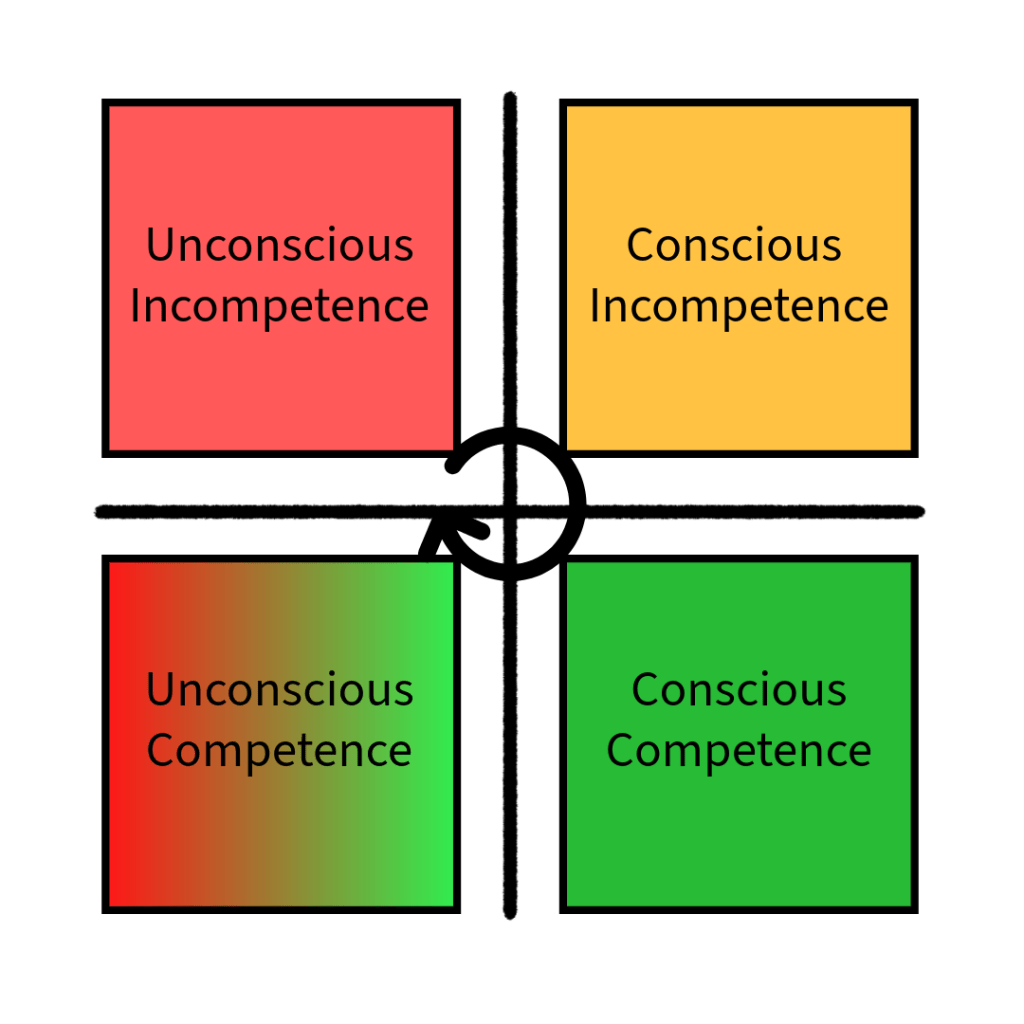
Unconsciously Incompetent
Here’s the thing. I didn’t know what I didn’t know. I didn’t know the risks I was taking. I didn’t understand the likelihood of them occuring. And I didn’t truly understand their consequences. I was unconsciously incompetent.
If you’re lucky, you live to learn some lessons, and then try again. If you’re smart, you find tools and resources to help prepare you properly before you head off on your first endeavour. This knowledge – that you don’t know what you don’t know, moves you to conscious incompetence (you know you don’t know).
The four stages of competence
Now you’ve gone on a couple of courses. Or joined a hiking club and learned some new skills along the way. You now find yourself consciously competent (you know you know). You know what you know and you might need to use a packing list to make sure you have everything you need, and might need to have some mental checklists when you set up camp but your safe, and have the skills to see you through.
Eventually you’ll find yourself having done enough overnight hikes that packing your pack in preparation is almost as straight forward as putting on your clothes. You just don’t even have to think about it any more. Congratulations! You’re now Unconsciously competent (you don’t have to actively think to be competent). Unfortunately, this lack of active thinking is also most likely to push you back towards being unconsciously incompetent as you become lax to the risks and dangers around you.
So where are the tools and resources you can access to help you go from unconsciously incompetent to consciously incompetent, and on your way to being consciously competent?
Trails WA has some great resources on staying safe on trails in Western Australia. They are also a great tool to find your first overnight hike in W.A. not to mention day hikes, and other trail options.
The Bibbulmun Track Foundation has some useful resources and recommendations for overnight walks along their trail. They also have guided hikes where you can learn the skills required to head out on your own.
HikeWest is the Peak Body for Hikers and Trail Runners in Western Australia. They are a great resource to find local hiking clubs in W.A.
There are also a number of excellent guiding businesses such as Off the Beaten Track, The Hike Collective, and others that have experienced guides who can help you on your journey to becoming self-sufficient. If you’re struggling with the confidence to get out on your own, these can be a great place to start. It’s a great way to meet new people, connect with others on a similar journey, and take away some of the mystery and possible fear of being alone in the great outdoors.
Your input
What were some mistakes you made on your first hike?
What were the consequences?
We all start somewhere and most of us have some embarrassing stories to tell. Sharing yours helps newbies feel okay about asking what they feel might be silly questions.
If you love moving through wild places under your own power, you’re in the right place. Found Outdoors is for people who hike, run, and explore trails with intention, curiosity, and care.
Who are we?
Found Outdoors is a Western Australian trail-based outdoor community focused on human-powered adventure, education, and environmental stewardship.
We’re lovers of the outdoors with a simple rule: nothing motorized. Our focus is on human-powered activities — hiking, running, cycling, scrambling, via ferrata, and more. If it happens on a trail, we’re in.
We’re passionate educators. We believe the best way to enjoy an activity is to avoid unnecessary mistakes, discomfort, or pain (yes, blisters are avoidable). A little knowledge goes a long way toward better adventures.
Community matters to us. Trail-based activities are almost always better when shared, and we’re committed to building an active, inclusive community where people can connect, learn, and grow together.
Finally, we believe we need more citizens and fewer consumers. While buying gear for the outdoors is inevitable, we believe in buying less, buying well, and caring more. We want our community to help protect wild places and make them better than we found them.
Our mission
Equipping, educating, and inspiring responsible, trail-based adventure.
Our mission is simple — but formidable:
To equip, educate, and inspire a new generation of trail-based adventurers who care deeply about the environment and are committed to leaving it better than they found it.
We’re starting here.
What’s this?
This is our blog. It’s where we’ll share:
stories from trails around the world
insights into hiking, running, and other trail-based activities
the gear we use and trust
trails still sitting high on our bucket list
people we’re inspired by and the cool things they’re doing
upcoming events, promotions, and competitions
ways for you to become part of the Found Outdoors community
your trips, experiences, and lessons learned in the outdoors
Our goal is to land in your inbox once every fortnight with something that inspires you, educates you, or helps you choose the right gear for your next adventure.
If that sounds like your kind of thing, subscribe and join a growing community of trail-based adventurers who believe that how we explore matters just as much as where we go.