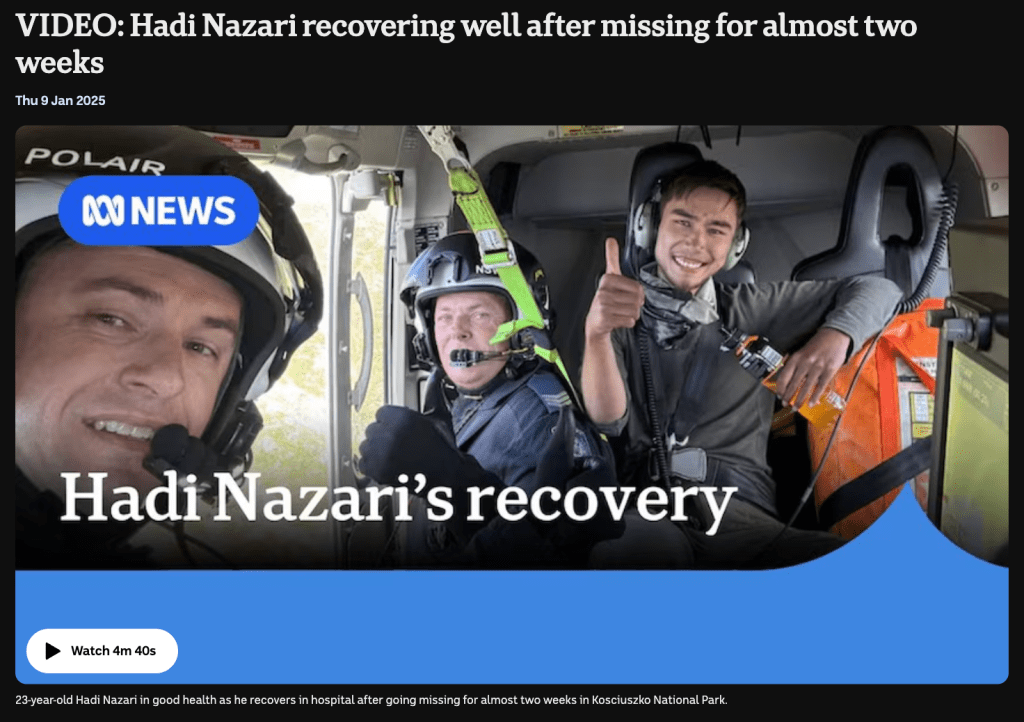
We all start somewhere. If you’re smart, or lucky, hopefully you don’t end up here ꜛ.
For many hikers, trail runners, and other outdoor enthusiasts, we often “try to run, before we can walk” (if you’ll pardon my pun). This post explains why that is, how to avoid it, and a framework you can use to check in with yourself to help avoiding unnecessary risks in the outdoors.
My origin story
My origin story of overnight hiking begins with a 17 year old (me) being given a university assignment: to do something outdoors. This 17 year old had never seen the inside of an “outdoor store”, or even knew that they existed. Growing up in Morley, Western Australia, my great outdoors was either the beach (because my Dad surfed, and would drag me along), or the sports ovals I played on when it was the weekend. Don’t get me wrong, my family would go for day hikes (or several hour hikes) in National Parks on special occasions. But we just weren’t a bushwalking/hiking/climbing outdoorsy family.
So, having read way too many fantasty books where the protaganist was a vagabond who wondered mythical worlds – overcoming immense odds , whilst experiencing events that the poor, misguided, xenophobic, townsfolk from their childhood couldn’t imagine in their wildest dreams… I dedided this was my chance to follow in these protagonists footsteps.
Armed with the misguided belief that I knew everything (as only a teenager can), I purchased a pack, and tent from my local kmart. I filled up some old 2 litre fruit juice containers with cordial. I grabbed a couple of tins of creamed rice and a sandwhich. Found a trail (aka a stretch of beach I could walk up, camp, and walk back down – because I also didn’t know about trails like the Bibbulmun Track either), and organised a lift with my Dad who would drop me off at the start and pick me back up from the same place the next day.
My mistakes
The astute, experienced overnight hikers will hopefully be chuckling right now. Here are some of the issues with what I did:
– I didn’t know where to look for hiking related resources. And rather than admit this and seek help, I just made up a route. One that was super simple because I also had no idea how to navigate (this was probably one of the smartest things I did to be fair)
– I didn’t check the weather (if memory serves it was early Autumn and the weather was in the high 20’s to low 30’s (celcius))
– My tent wasn’t a hiking tent. It was a 4-6 person tent you could stand up in. So it was heavy. And huge
– No sleeping mat to insulate me off the ground
– No sleeping bag to keep me warm overnight (15 degrees will still feel cold if you’re not insulated off the ground!)
– I had to carry two full days of water, aka cordial (there was definitely no fresh water to be found along this stretch of coast)
– No first-aid kit (or skills to use it)
– No cutlery to eat with
– No headtorch
– No known way of reaching out in an emergency
– No knowledge of the tides and whether or not I could safely camp on the beach without being swept away by a large wave
Fortunately, it was hot. Uncomfortably hot. So, I managed to hike a ways down the beach (enough that there werent any other people around), and set up my tent. Make it look like I had camped overnight. Then after analyzing my options (including a rather uncomfortable night sleeping in a tent with any way to stay warm), I was fortunate enough that I had phone signal, could call my Dad, and have him turn around and come and pick me up!
Unconsciously Incompetent
Here’s the thing. I didn’t know what I didn’t know. I didn’t know the risks I was taking. I didn’t understand the likelihood of them occuring. And I didn’t truly understand their consequences. I was unconsciously incompetent.
If you’re lucky, you live to learn some lessons, and then try again. If you’re smart, you find tools and resources to help prepare you properly before you head off on your first endeavour. This knowledge – that you don’t know what you don’t know, moves you to conscious incompetence (you know you don’t know).
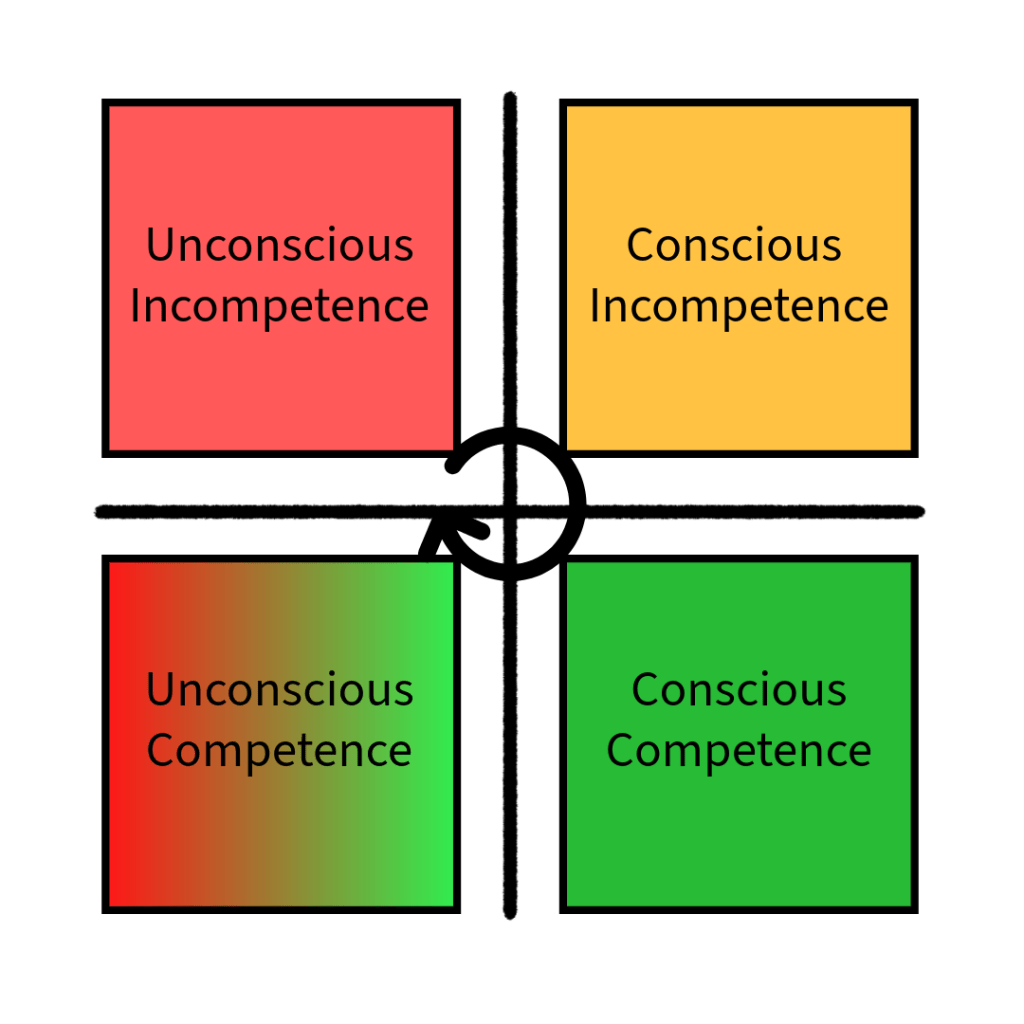
Now you’ve gone on a couple of courses. Or joined a hiking club and learned some new skills along the way. You now find yourself consciously competent (you know you know). You know what you know and you might need to use a packing list to make sure you have everything you need, and might need to have some mental checklists when you set up camp but your safe, and have the skills to see you through.
Eventually you’ll find yourself having done enough overnight hikes that packing your pack in preparation is almost as straight forward as putting on your clothes. You just don’t even have to think about it any more. Congratulations! You’re now Unconsciously competent (you don’t have to actively think to be competent). Unfortunately, this lack of active thinking is also most likely to push you back towards being unconsciously incompetent as you become lax to the risks and dangers around you.
Proper, Prior Preparation, Prevents Poor Performance.
Resources
So where are the tools and resources you can access to help you go from unconsciously incompetent to consciously incompetent, and on your way to being consciously competent?
Trails WA has some great resources on staying safe on trails in Western Australia. They are also a great tool to find your first overnight hike in W.A. not to mention day hikes, and other trail options.
The Bibbulmun Track Foundation has some useful resources and recommendations for overnight walks along their trail. They also have guided hikes where you can learn the skills required to head out on your own.
HikeWest is the Peak Body for Hikers and Trail Runners in Western Australia. They are a great resource to find local hiking clubs in W.A.
There are also a number of excellent guiding businesses such as Off the Beaten Track, The Hike Collective, and others that have experienced guides who can help you on your journey to becoming self-sufficient. If you’re struggling with the confidence to get out on your own, these can be a great place to start. It’s a great way to meet new people, connect with others on a similar journey, and take away some of the mystery and possible fear of being alone in the great outdoors.
Your input
What were some mistakes you made on your first hike?
What were the consequences?
We all start somewhere and most of us have some embarrassing stories to tell. Sharing yours helps newbies feel okay about asking what they feel might be silly questions.

Leave a comment